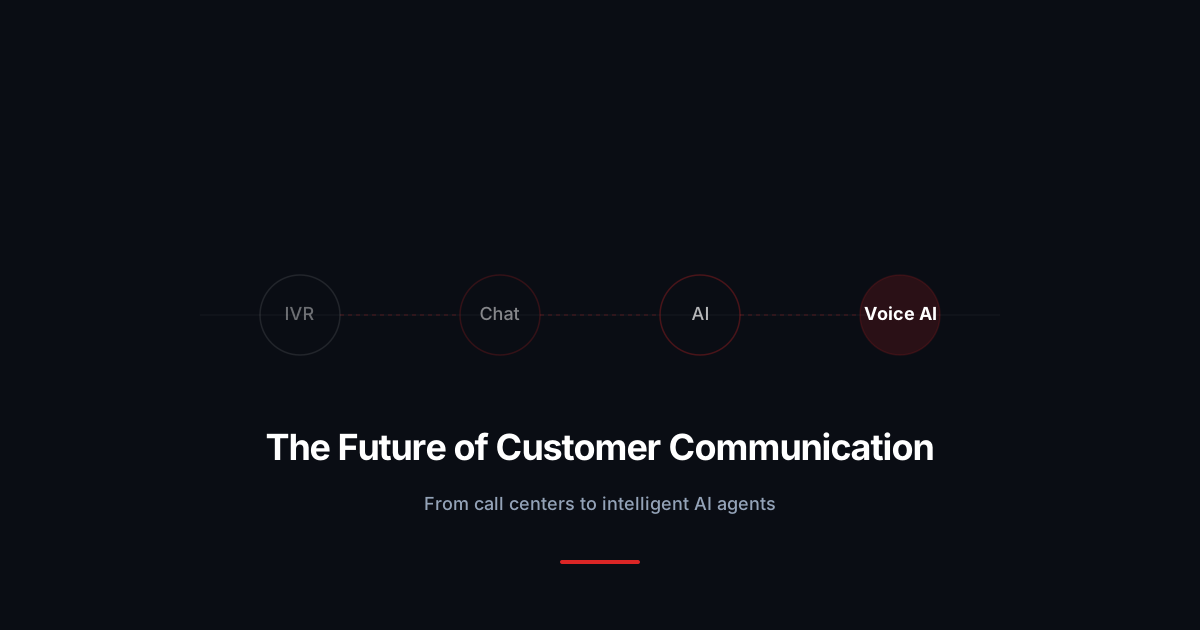
The Future of Customer Communication
The way businesses communicate with customers is undergoing its biggest transformation since the invention of the telephone. Here's what's changing and why it matters.
The Problem with Traditional Call Centers
Traditional call centers have fundamental limitations:
- Hold times - Customers wait an average of 13 minutes before reaching an agent
- Inconsistency - Experience varies wildly depending on which agent picks up
- Limited hours - Most businesses can't afford 24/7 human staffing
- Scaling costs - Each additional agent means hiring, training, and ongoing salary
- Agent burnout - High turnover rates (30-45% annually) mean constant retraining
The AI Communication Stack
The future isn't about replacing human connection - it's about augmenting it:
Tier 1: AI Handles Routine - 70% of calls follow predictable patterns that AI handles perfectly: appointment scheduling, FAQ answering, status updates, payment processing.
Tier 2: AI-Assisted Humans - Complex situations get routed to human agents, but with full context from the AI conversation. No "please repeat your issue."
Tier 3: Human Expertise - Emotional, complex, or high-stakes conversations remain with skilled human agents who have more time because AI handles the routine.
What This Means for Businesses
Small Businesses - Can finally compete with enterprise-level phone support without enterprise budgets. A solo consultant can have a professional receptionist working 24/7.
Mid-Market - Can scale customer communication without proportional headcount growth. Handle seasonal spikes without temporary hiring.
Enterprise - Can redeploy human agents to high-value interactions while AI handles volume. Better metrics, better insights, better outcomes.
The Timeline
This isn't 10 years away. The technology is production-ready today:
- Speech recognition accuracy exceeds 95%
- Response latency is under 500ms
- Voice quality is indistinguishable from human in controlled settings
- Cost per conversation is 10-50x lower than human agents
Preparing Your Business
1. Audit your call volume - What percentage of calls are routine? 2. Document your processes - AI agents need clear instructions 3. Start with one use case - Don't try to automate everything at once 4. Measure and iterate - Track customer satisfaction alongside efficiency
The businesses that adopt AI communication early will have a significant competitive advantage - not just in cost savings, but in customer experience, response time, and the ability to scale without friction.
Ready to try AI voice calling for your business?
Get started free